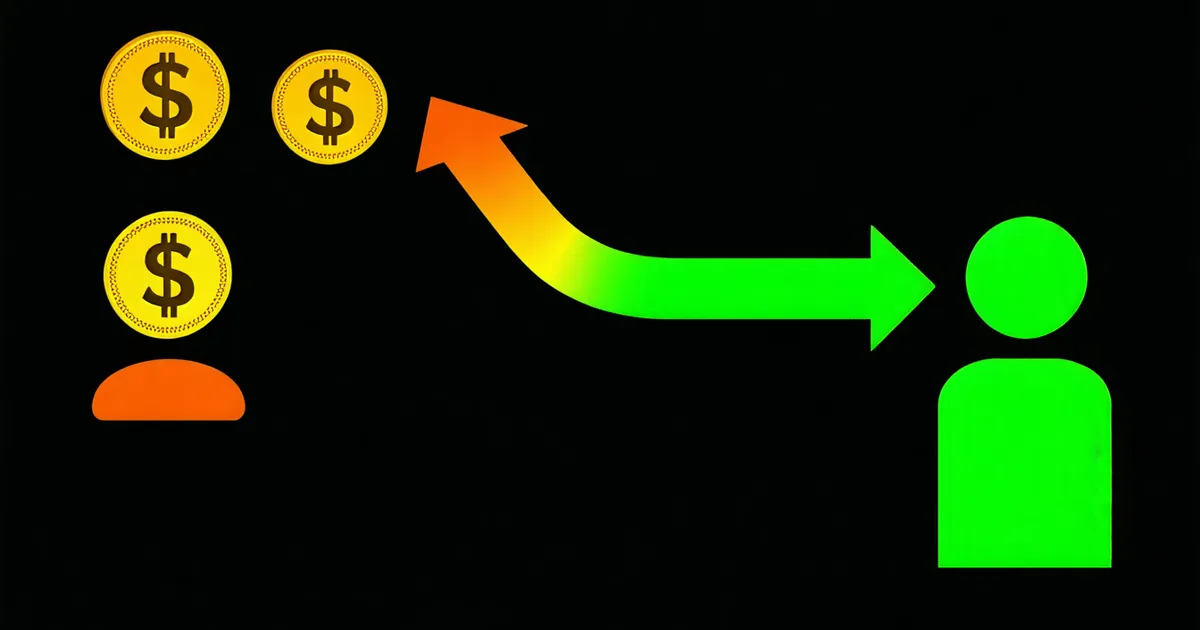
The gifted-sub obligation spiral starts small. A streamer puts up a sub goal — say, 100 total subs — and a generous viewer drops 20 gifted subs to help. Chat cheers. The goal is 80% of the way there. Another viewer, feeling the energy, gifts 5 more. Now a third viewer, who can only afford one, is watching the goal sit at 97 and feeling the pressure to finish it. They gift one sub they maybe couldn't really afford. The goal hits. The streamer celebrates. And somewhere in that moment, the community has shifted from people who watch your stream because they enjoy it to people who feel implicitly responsible for hitting your financial milestones.
That shift is subtle and it compounds over time. Communities that spend months organized around sub goals start to feel transactional. Viewers who can't contribute financially feel like second-class participants. The donation-only model isn't just inefficient — it's a community health problem that unfolds gradually enough that most streamers don't notice it until the damage is done.
The Math on $5: Subs vs. Bits vs. Tips
Before the mechanics, the economics. When a viewer spends $5 on your channel, where does it go depends heavily on which mechanism they use:
- Tier 1 subscription at $4.99: Twitch takes 50% (for non-partner affiliates, sometimes 70/30 for Partners with high tenure). Streamer nets roughly $2.50.
- 500 bits at $5 (Twitch's standard rate): Bits have a fixed payout of $0.01 per bit, so 500 bits = $5 spend by viewer, $5 payout to streamer. But Twitch takes its cut when the viewer purchases the bits — the streamer gets the full bit face value. Bits are one of the better deals for the streamer-side economics on small amounts.
- Direct tip via StreamElements or Streamlabs at $5: Streamer gets close to $5 minus payment processor fees (roughly 2.9% + $0.30 for card payments), so about $4.55. No platform cut.
This math matters for sub goal design because a "100 sub goal" sounds like $500 of viewer support, but the streamer actually nets around $250 of that. A goal framed around bits or direct support would deliver more per-dollar to the streamer — but subs are more visible, they show in the subscriber count, and they unlock emotes for the community. The goal psychology is tied to the social proof metric, not the money.
Sub Train Mechanics and Chain Psychology
A sub train — the Twitch mechanic where each new subscription within a time window extends a chain counter — is a different psychological beast from a sub goal. A sub goal is a collective commitment toward a shared milestone. A sub train is an individual moment of participation in a chain that anyone can extend.
The sub train visual on the overlay shows the current chain length and the time remaining before the chain breaks. The pressure is temporal rather than financial — you're not obligating anyone to pay, you're creating a window where paying has extra social meaning. This is why sub trains feel qualitatively different from gifted-sub bombs during sub goals. The train mechanic is opt-in-or-watch, not opt-in-or-fail-the-goal.
"A sub goal puts the burden on the community to collectively pay. A sub train creates a moment where payment has meaning. Those are different things with very different community dynamics downstream."
Why a Public Goal Counter Changes Redemption Velocity
The research on goal proximity is well-established in behavioral economics — people contribute more as a goal gets closer to completion. The implication for streaming sub goals: once you're at 80–90% of the goal, you get a surge of contributions that wouldn't have happened earlier. The public visibility of the counter creates that surge. Hiding the counter removes the psychological trigger but also removes the community excitement. Running the counter but setting the goal high enough that the 80% surge falls in the middle of your stream — not right at the end — is the configuration that prevents the obligation spiral while keeping the engagement mechanics.
The obligation problem intensifies when you set a goal that's reachable in a single stream with any reasonable viewer engagement. If 50 subs is achievable in a 2-hour stream with 300 viewers, you'll hit it regularly and start treating it as an income commitment rather than a community milestone. Sub goals that require 2–3 streams to hit generate less per-stream pressure and more of the collaborative "we're building toward something" feeling.
Alternative Milestone Models
The donation-only goal isn't the only architecture. The premise of a sub goal is that viewer financial support unlocks something for the community. That unlock doesn't have to be triggered exclusively by subscriptions or tips. Consider the alternative structure: a viewer-interaction threshold that can be hit through a combination of subscriptions, bits, channel point redemptions, and cumulative watch time participation.
This model has several advantages. It includes viewers who participate through channel points (free currency earned by watching) rather than real money. It spreads the contribution across more viewers and more mechanisms, which reduces the per-person obligation. And it frames the milestone as a community achievement rather than a financial target — "when we hit 500 interactions this stream, we unlock X" rather than "when 100 people sub, I'll do X."
We're not saying donation-only goals are bad — they're a legitimate part of the creator economy and many communities have healthy ones. We're saying that if you're noticing your community feels more transactional than it used to, or you're seeing fewer non-paying viewers participating in chat, the goal structure is worth examining as one potential cause.
Gifted Sub Obligations and the Streamer Side
There's a streamer-side version of the obligation spiral too. When a viewer gifts 50 subs during a difficult stream, the streamer feels obligated to be enthusiastic about it regardless of emotional state. When the goal hits at hour 5 of a 6-hour stream and you committed to a "bonus hour" as the goal reward, you're doing that hour whether or not you have the energy. The goal creates commitments that were easy to make at the start and harder to keep at the end.
The practical discipline: don't set goal rewards you can't deliver on your worst day. If the goal reward is "I'll keep streaming for an extra 30 minutes," make sure 30 minutes extra is something you'd actually be capable of at hour 8, not just hour 2. Goals that reward the community with content or experiences rather than extended streaming time (an emote unlock, a channel point event, a raffle, a community game night) put the reward on your schedule rather than in your stamina bank.
Tangia's alternative sub-goal mechanics let you build milestone counters that aggregate multiple interaction types — not just subs. If you want to explore a goal structure that includes channel point redemptions and bits alongside subs, the features page walks through how the interaction threshold configuration works.